


Community Spotlights
People
In our community, individuals come together to create a lasting impact on the lives of others. Through acts of kindness, volunteering, and support, they foster an environment where everyone can thrive. Each person's contribution, big or small, helps to uplift those in need, making our community stronger and more resilient. Together, we are making a difference, one life at a time.
Events
Community events play a vital role in shaping and engaging local neighborhoods. They provide opportunities for residents to connect, share ideas, and collaborate on common interests. These gatherings foster a sense of belonging and pride, encouraging individuals to participate actively in their community. Ultimately, community events strengthen relationships and enhance the overall quality of life for everyone involved.
Organization's
Community organizations, including non-profits, government entities, and local businesses, play a vital role in delivering unique services tailored to the needs of the community. These collaborations foster an environment where resources are shared, ensuring that essential services are accessible to everyone. Community support is equally important, as it encourages participation and engagement, enhancing the effectiveness of these initiatives. Together, we create a robust network that strengthens our community and addresses its specific challenges.
Policies
Policies play a crucial role in supporting our law enforcement and enhancing community safety. They provide clear guidelines and frameworks that empower our officers to perform their duties effectively while ensuring accountability. By aligning with the values and needs of the community, policies foster trust and between law enforcement and residents. Ultimately, well-crafted policies not only protect the community but also promote a safer environment for everyone.
The Border, in Its Own Words: The Story of Border Arts Corridor


Before the Border Arts Corridor had an artist fellowship or plans for a historic theater, it had a coffee shop.
At Galiano’s Cafe in downtown Douglas, artists and neighbors gathered, exchanged ideas, and organized exhibitions. Owners Jenea Sanchez and Robert Uribe saw talent in their community, but few opportunities for artists to exhibit their work or earn a living from it.
In 2015, they founded Border Arts Corridor to help change that.
“Too often, the border is defined by people looking in from the outside,” said Jenea Sanchez.
BAC wanted residents of Douglas, Arizona, and Agua Prieta, Sonora, to tell their own stories through art rooted in their lives.
For Sanchez, that mission is personal. Raised between both cities, she grew up navigating two countries, cultures, and languages. Her approximately 20 years of artistic practice have explored identity, belonging, and the borderlands.
Uribe, an educator and former Douglas mayor, was born in the Dominican Republic and raised in Manhattan. Together, the founders built an organization committed to creating opportunities close to home.
Today, Sanchez co-leads BAC with Martina Rendón, a painter and muralist born in Agua Prieta who now lives in Douglas. Rendón draws inspiration from the region’s people, landscapes, and everyday experiences.
Artistic Director Luisa Santos Martínez and longtime gallery and outreach leader Dave Tarullo bring their own perspectives. Santos Martínez discovered filmmaking as a way to preserve memories after migrating from Colombia to the United States. Tarullo’s interest in storytelling through art began with a high school teacher more than 30 years ago.
That connection between creativity and personal experience runs through BAC’s programs.
Through Stories That Soar, a partnership with Literacy Connects, students at Loretto Catholic School in Douglas and Colegio Americano Anais in Agua Prieta wrote stories and exchanged them through a “Magic Box.” Professional actors brought their words to life.
Children could see their ideas become performances while discovering experiences shared with students across the border.
The annual Binational Artwalk brings artists, performers, families, and visitors together in both cities. The BAC Fellowship offers emerging artists mentorship, financial support, and opportunities to develop and exhibit work.
Sustaining those opportunities takes persistence. Funding is unpredictable, staff members juggle responsibilities, and international collaborations require coordination around transportation, crossing times, and administrative requirements.
BAC credits earlier generations of arts advocates with helping make its work possible.
In 2018, the Douglas Arts and Humanities Association entrusted BAC with its nonprofit organization and stewardship of the Grand Theatre. The organization recognizes Arturo Escalante’s early support and Pedro Teran’s commitment to young artists, including his collaboration on the Reframing Douglas public art project.
Restoring the Grand Theatre remains among BAC’s largest ambitions. Its vision includes performances, film screenings, arts education, and space for artists from both countries to collaborate.
BAC also plans to expand its fellowship and develop a Border Art Directory and online marketplace, helping regional artists reach buyers and professional opportunities beyond their communities.
Residents can support the work by attending exhibitions, purchasing local art, volunteering, sponsoring programs, or donating through bacaz.org.
For young people unsure how to begin, BAC encourages them to create with whatever materials are available. A family story, a photograph, or a sketch of a familiar place can become the beginning of an artistic practice.
The organization hopes those first efforts lead to lasting connections: a workshop, a conversation with another artist, or the confidence to share something publicly. Its gallery and community programs offer places to take those steps.
The idea reaches back to that downtown coffee shop: give local talent somewhere to gather, an audience willing to listen, and room to grow.
The Dean Who Came Home to Build a Bridge
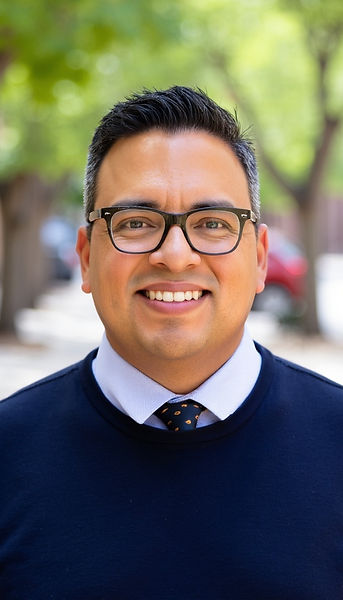
Every morning in Douglas, Abraham Villareal starts his day with a clear sense of purpose. He spends half of his time on the Cochise College Douglas Campus, where he connects with students, supports faculty, and walks past buildings that are finally getting a fresh coat of paint after 62 years of service. The other half of his day is dedicated to the community, reminding everyone that the college that shaped him is still here, actively engaged, and changing lives.
“I was born in Douglas, Arizona, and after completing my education at Douglas High School and Cochise College, I transferred to Western New Mexico University,” Villareal explains. This simple statement reveals his motivation for returning.
After spending 17 years in Silver City, New Mexico, where he built a successful career in higher education, Villareal returned to his hometown to serve as the Campus Dean of the Douglas Campus. For him, this role is more than just a job; it’s deeply personal.
“This position is special because it lets me do what I love most: engage with both the community and campus life. I spend half my week on campus providing support, while the other half is all about promoting the college’s mission within the community,” he shares.
These values have been ingrained in Douglas for 62 years. Cochise College offers a range of academic programs, workforce development, and cultural opportunities that enhance the quality of life in ways that many rural towns can only aspire to. Villareal appreciates this greatly.
“I never take for granted the fact that Cochise College has been a part of this community for 62 years. We provide countless academic programs, workforce training, and cultural experiences. It's a privilege to remind people how much we all benefit from having a community college right here in our area,” he emphasizes.
When asked about what led him to education, he doesn’t dwell on titles. Instead, he shares his story as a student who lacked direction but understood the importance of education.
“When I first enrolled at Cochise College, I was just like many students—unsure about my future but aware that education was vital. I signed up for classes right after high school and kept moving forward,” he reflects. “Being in class and witnessing firsthand the difference colleges can make in people's lives and communities inspired me to stay in this field. I have always had a work ethic and held various jobs—from housekeeper and windshield repair technician to taxi driver. Everything about work fascinates me. I consider myself a lifelong learner.”
That mindset continues to fuel his passion today. He notes that his greatest inspiration comes from the students themselves.
Every morning, I feel inspired by our students. They are starting their adult lives, making key choices, and challenging themselves, which motivates me to go to work.
For Villareal, the Douglas Campus is unique because it blends history, the present, and the future. Alumni share how Cochise shaped their lives, and current students encourage faculty and staff to provide the best education possible for future leaders. The diversity of Cochise County, with its many backgrounds and cultures, makes Cochise College stand out among Arizona colleges.
Cochise College helps the people of Cochise County by providing education for a variety of groups, including traditional students, working parents, military members, and those crossing the border. This diversity helps prepare students for jobs in many fields, with support from local businesses and nonprofits.
“Recently, we renovated the Douglas Campus with new classrooms and outdoor spaces. We invite the community to share their ideas for future planning. We encourage first-generation college students to pursue their degrees, with support available to help them uplift their families and communities,” said Villareal.
Villareal, who is active in local volunteer work, highlights the importance of community partnerships for the college’s success. He values the strong connection between Douglas and Agua Prieta. Despite challenges in rural higher education, he believes Cochise College is innovating and connecting its past with future opportunities.
From Second Chances to New Beginnings: The Bambi Fund Builds Opportunity in Douglas

In a close community like Douglas, turning an idea into an opportunity often just takes someone to open a door.
The Bambi Fund has made it their goal to open those doors since it started at the end of 2022. The director, Whitney, recognized a real need: people had ideas and the drive to create their own businesses, but they struggled to find traditional funding and support. This was especially true for those who had been incarcerated.
“There were so many people with great ideas and the drive to create something for themselves, but they simply didn't have access to the resources or funding they needed,” said Ana Samaniego, Program Manager for the Bambi Fund’s Douglas location, known as the Hustlers Roost.
The mission is to provide funded opportunities for learning and growth while helping small businesses, nonprofits, and community-led projects. Samaniego also emphasizes that people don’t have to face challenges alone.
In less than four years, what began as a small initiative has grown to include two full-time and two part-time employees, as well as interns and volunteers. At the Hustlers Roost in Douglas, Samaniego handles daily operations. Her role changes hour by hour, from coaching an entrepreneur to planning a workshop.
“Supporting small businesses is our main focus, but since we’re a community space, many other activities happen here too,” she said.
This variety is intentional. The Hustlers Roost hosts a monthly Art Jam, a Chess Club twice a month, yoga and meditation every Wednesday, English classes bi-weekly, and a Makers Corner for local creators. Clothing swaps promote sustainability, and local organizations without their own space use the Roost to meet and continue their work. It has become more than a business center; it’s a place for people to gather.
“Sometimes people don't need someone to solve their problem,” Samaniego said. “They need access to space, resources, connections, or help figuring out the next step.”
This idea shapes their programs. Instead of guessing what Douglas needs, the team asked residents directly. Concerns ranged from more activities for families to support for small businesses, but one issue stood out: financial hardship and lack of job opportunities.
In response, they created a job-readiness drop-in clinic where residents can get help with resumes, job applications, and interview preparation, plus receive free interview clothing, removing one small obstacle that can lead to new opportunities.
For Samaniego, this work is personal. Raised in Douglas since middle school after moving from Phoenix, she is also a small-business owner who understands the challenges of starting without resources.
“Douglas became home to me,” she said. “I'm not just working in this community; I'm part of it.”
Her message is simple: “Come by during our regular work hours, meet us, and see what we’re doing.”
As she puts it, “Sometimes just having a place to walk into, feel welcome, and connect with others can lead to something meaningful.”